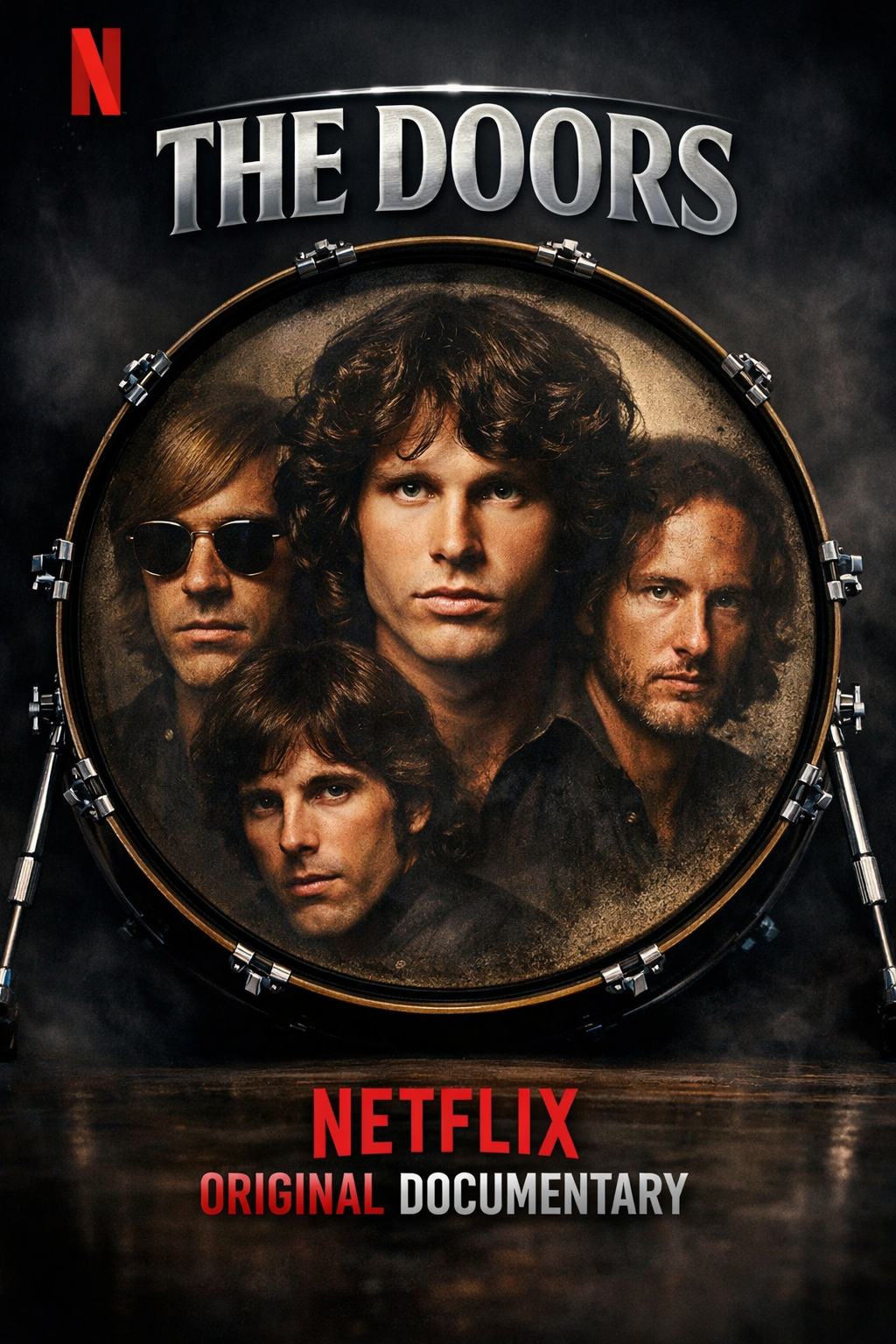
The long wait for fans of classic rock and cultural history appears to be coming to an end, as Netflix has officially released the trailer for its highly anticipated documentary on The Doors. The announcement has quickly sparked excitement across social media, drawing attention from longtime devotees and a new generation curious about the band’s enduring mystique.
The trailer offers a moody and immersive glimpse into the world of The Doors, immediately setting a tone that feels true to the band’s legacy. With atmospheric visuals and carefully selected audio snippets, it hints at a project that aims to capture not just the music, but the spirit and contradictions that defined the group.
From the opening moments, the preview suggests that the documentary will explore the band’s rapid rise and cultural impact during one of the most turbulent periods in American history. The Doors were never just a rock band, and the trailer leans into that idea by framing them as a reflection of the era’s unrest, experimentation, and search for meaning.
Jim Morrison’s presence looms large throughout the trailer, as expected. Archival footage and voiceovers tease a deeper examination of his persona, blending the poet, the provocateur, and the reluctant rock icon into a complex portrait that still fascinates decades later.
At the same time, the trailer makes it clear that this is not solely Morrison’s story. Brief flashes of the other band members suggest a more balanced narrative, one that acknowledges the musical innovation and collaborative tension that powered The Doors’ distinctive sound.
Netflix appears to be positioning the documentary as both a historical record and a reinterpretation. The trailer hints at rarely seen footage and newly contextualized moments, suggesting that even well-informed fans may encounter fresh perspectives on familiar stories.
The visual style of the preview feels deliberate and cinematic, avoiding the feel of a standard retrospective. Instead, it promises an experience that mirrors the band’s own artistic ambition, blending music, poetry, and visual symbolism.
There is also an underlying sense that the documentary will confront the myths surrounding The Doors head-on. The trailer teases moments of introspection and conflict, implying a willingness to look beyond legend and examine the human cost of fame and excess.
For viewers less familiar with the band, the trailer functions as an invitation rather than a history lesson. It emphasizes emotion and atmosphere over chronology, making the story accessible without diluting its depth.
The response to the trailer suggests that interest in The Doors remains as strong as ever. Comments and reactions highlight how their music continues to resonate, particularly in times when questions of identity, authority, and freedom feel newly relevant.
Netflix’s involvement also raises expectations about production quality and storytelling scope. The trailer signals a polished, thoughtfully constructed documentary that aims to stand alongside the platform’s most acclaimed music-focused releases.
As anticipation builds, the trailer succeeds in doing what it is meant to do: spark curiosity without revealing too much. It leaves viewers eager to see how the full documentary will weave together music, memory, and meaning.
Whether approached as a nostalgic journey or a first encounter, the upcoming documentary promises to reignite conversations about The Doors and their place in cultural history. If the trailer is any indication, this release may become a defining exploration of a band that never fit neatly into any category.