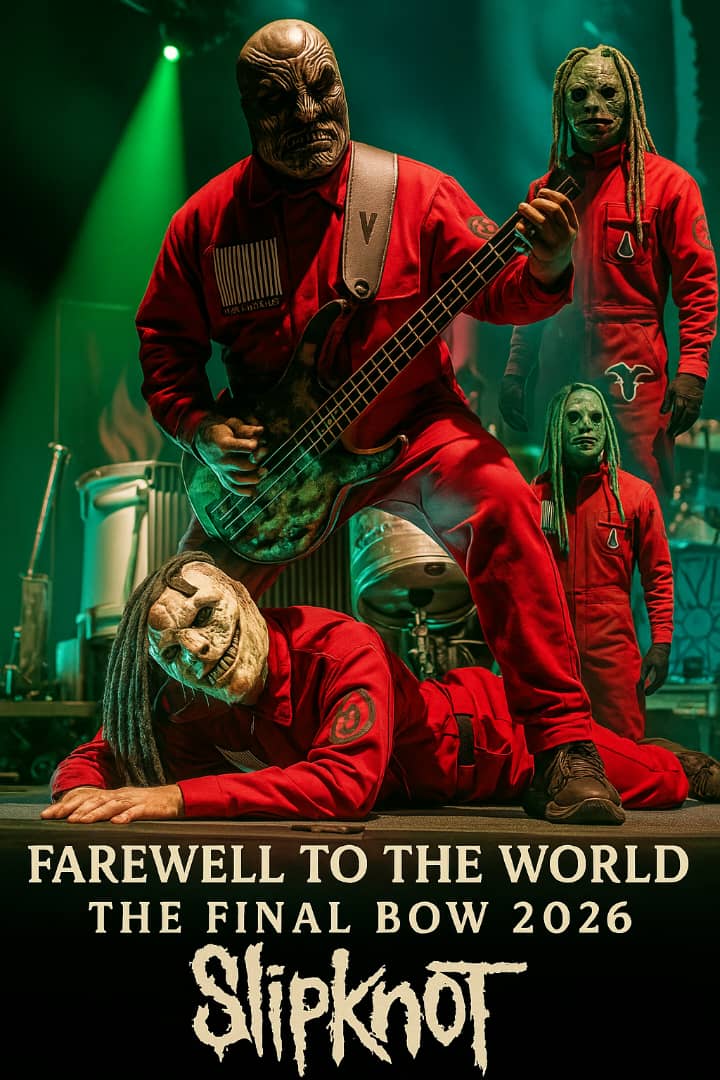
For more than two decades, Slipknot has stood as one of the most aggressive, theatrical, and influential forces in heavy metal. From the moment the masked collective emerged from Des Moines, Iowa, they shattered expectations with their chaotic energy, pounding percussion, and emotionally charged music. Now, after years of relentless touring, chart-topping albums, and unforgettable live performances, the band has announced what many fans hoped would never come: a farewell world tour in 2026. Titled The Final Bow, the tour promises to be both a celebration and a goodbye to one of metal’s most iconic acts.
The announcement immediately sent shockwaves through the music world. Social media erupted with emotional reactions from longtime fans who grew up blasting Slipknot albums through headphones, in crowded mosh pits, and during moments when the band’s music felt like the only thing that truly understood them. For many listeners, Slipknot was never just a band. It was an identity, a release, and a brotherhood built around pain, rage, resilience, and survival.
Slipknot’s rise to fame was unlike anything the metal scene had witnessed before. Their terrifying masks, matching jumpsuits, and explosive stage presence created an image that was impossible to ignore. Yet beneath the horror-inspired visuals was a level of musicianship and emotional depth that separated them from countless imitators. Albums like Iowa, Vol. 3: The Subliminal Verses, and All Hope Is Gone proved the band could combine brutality with melody, chaos with vulnerability, and aggression with introspection.
The band’s live performances became legendary over the years. Concerts often felt more like controlled riots than traditional shows, with members diving across the stage, pounding on custom percussion rigs, and unleashing a wall of sound powerful enough to shake entire arenas. Fans didn’t simply attend a Slipknot concert; they survived it. That raw intensity turned the group into one of the most respected touring acts in modern rock and metal history.
Despite the success, Slipknot’s journey has never been easy. The band endured tragedy, lineup changes, personal struggles, and the immense pressure that comes with maintaining such a massive legacy. The death of bassist Paul Gray in 2010 marked one of the darkest moments in the band’s history, leaving both fans and bandmates devastated. Years later, the loss of drummer Joey Jordison added another painful chapter to Slipknot’s story. Yet through grief and uncertainty, the band continued to move forward, honoring the past while evolving musically.
The announcement of The Final Bow 2026 feels especially emotional because Slipknot has always represented endurance. Their music confronted depression, anger, alienation, and trauma in a way that resonated deeply with millions around the world. Songs like “Duality,” “Psychosocial,” and “Snuff” became anthems for listeners struggling to find their place in a chaotic world. In many ways, Slipknot gave a voice to people who felt ignored or misunderstood.
According to the band, the farewell tour is intended to celebrate every era of Slipknot’s career. Reports suggest the setlists will span their entire catalog, from the raw fury of their early work to the more experimental and emotional tracks from recent albums. Fans are already speculating about surprise appearances, deep cuts, and special tributes to former members who helped shape the band’s identity over the years.
The visual production for the tour is also expected to be massive. Slipknot has always treated concerts like theatrical experiences, blending dark imagery, pyrotechnics, aggressive lighting, and cinematic storytelling into their performances. If this truly is the final chapter, the band appears determined to make it unforgettable. Early promotional images hint at a darker, more reflective atmosphere while still preserving the violent energy fans expect from a Slipknot show.
For the metal community, the farewell tour represents more than the end of a band. It marks the closing of a significant era in heavy music. Slipknot helped redefine what mainstream metal could look and sound like in the late 1990s and early 2000s. They opened doors for countless heavier acts while proving that extreme music could achieve commercial success without sacrificing authenticity or intensity.
Many fans are already preparing for an emotional experience when the tour begins. Some have followed Slipknot for decades, attending multiple tours and collecting memories tied to specific songs and albums. Others discovered the band more recently through streaming platforms and online communities. Regardless of when they became fans, there is a shared understanding that witnessing Slipknot live one final time will be historic.
Music critics and industry insiders are also reflecting on the band’s broader impact. Beyond the masks and aggression, Slipknot pushed conversations about mental health, identity, and emotional honesty into spaces where vulnerability was often hidden behind toughness. Their willingness to confront uncomfortable emotions became one of the reasons their music endured across generations.
Although the farewell announcement suggests an ending, many fans believe Slipknot’s legacy will continue long after the final show concludes. Their influence can already be heard in newer metal, hardcore, and alternative acts inspired by their sound and aesthetic. Future musicians will continue studying the band’s ability to blend chaos, melody, rhythm, and storytelling into something uniquely powerful.
As tickets prepare to go on sale, anticipation is building rapidly across the globe. Venues are expected to sell out within minutes as fans scramble for the opportunity to be part of music history. For some, the farewell tour will be a celebration. For others, it will feel like saying goodbye to a chapter of their youth. Either way, The Final Bow 2026 promises to be one of the most emotional and talked-about tours in modern metal history.
When Slipknot finally steps onto the stage for the last time, it will not simply mark the end of concerts or albums. It will symbolize the conclusion of a movement that challenged expectations and gave millions of fans a place to belong. The masks may eventually come off, and the lights may fade, but the impact Slipknot left on heavy music and its culture will never disappear.