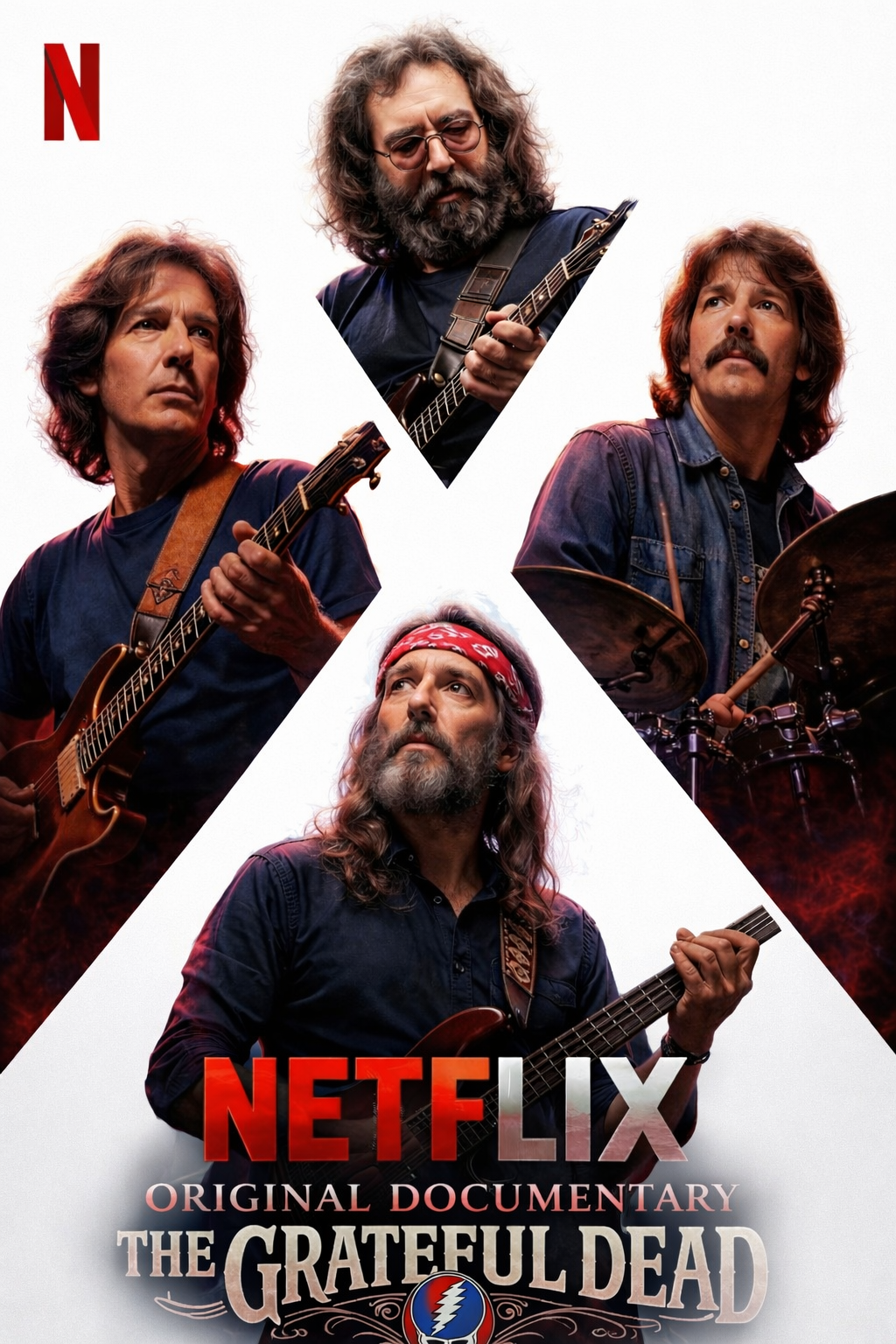
The arrival of the long-awaited trailer for the Grateful Dead documentary on Netflix has stirred excitement across generations of music fans. From the very first frame, it becomes clear that this is not just a nostalgic look back, but a layered exploration of a band whose influence continues to ripple through modern culture. The trailer captures both the mystique and the madness that defined their journey.
There is an immediate sense of movement and unpredictability in the footage. The editing leans into the chaotic energy that became synonymous with the band’s live performances. Flashing lights, sprawling crowds, and extended improvisations are woven together, hinting at a story that embraces disorder rather than trying to tame it.
At the center of it all is Jerry Garcia, whose presence looms large even in brief glimpses. The trailer suggests a narrative that doesn’t just celebrate his artistry, but also reflects on the weight he carried as the spiritual and creative anchor of the band. His expressions—at times joyful, at times distant—tell a story of their own.
Equally compelling are the appearances of Bob Weir and Phil Lesh, whose contributions to the band’s evolving sound are highlighted through both archival footage and present-day reflections. The chemistry between members feels palpable, even decades later, reinforcing the idea that the Grateful Dead was always more than the sum of its parts.
The trailer doesn’t shy away from the cultural phenomenon that surrounded the band. The Deadhead community is portrayed not just as an audience, but as an essential part of the story. Their devotion, their rituals, and their sense of belonging add a human dimension that elevates the narrative beyond music alone.
There’s also an undercurrent of introspection running through the preview. Moments of silence and stillness are interspersed with the chaos, suggesting that the documentary will take time to reflect on the costs of such an unconventional path. Fame, excess, and the passage of time all seem to play a role in shaping the story.
Visually, the trailer is striking in its contrasts. Psychedelic imagery gives way to grainy archival clips, creating a bridge between past and present. This juxtaposition reinforces the idea that the band’s legacy is both rooted in a specific era and continuously evolving.
Music, of course, remains the driving force. Even in short bursts, the sound is unmistakable—fluid, exploratory, and unbound by traditional structures. The trailer uses these musical fragments to guide the viewer emotionally, building anticipation for the deeper dives that the full documentary promises.
Another intriguing element is how the documentary appears to tackle the concept of legacy. It raises questions about what it means to leave something behind, especially when that something is as intangible as a musical experience. The Grateful Dead’s impact is not confined to albums or charts; it lives on in the memories and identities of those who followed them.
The pacing of the trailer mirrors the band’s own rhythm—sometimes frenetic, sometimes meditative. This ebb and flow creates a viewing experience that feels immersive, almost like attending one of their legendary live shows. It’s a clever way of translating their essence into a visual format.
There’s a sense that the documentary will also explore the tensions within the band. Creative differences, personal struggles, and the sheer demands of their lifestyle are hinted at in fleeting but telling moments. These elements add depth, ensuring that the story is not just celebratory, but honest.
Ultimately, the trailer leaves a lasting impression by embracing contradiction. It presents the Grateful Dead as both chaotic and cohesive, ephemeral and enduring. If the full documentary delivers on this promise, it could offer one of the most comprehensive portraits of the band to date—one that captures not just what they did, but what they meant.