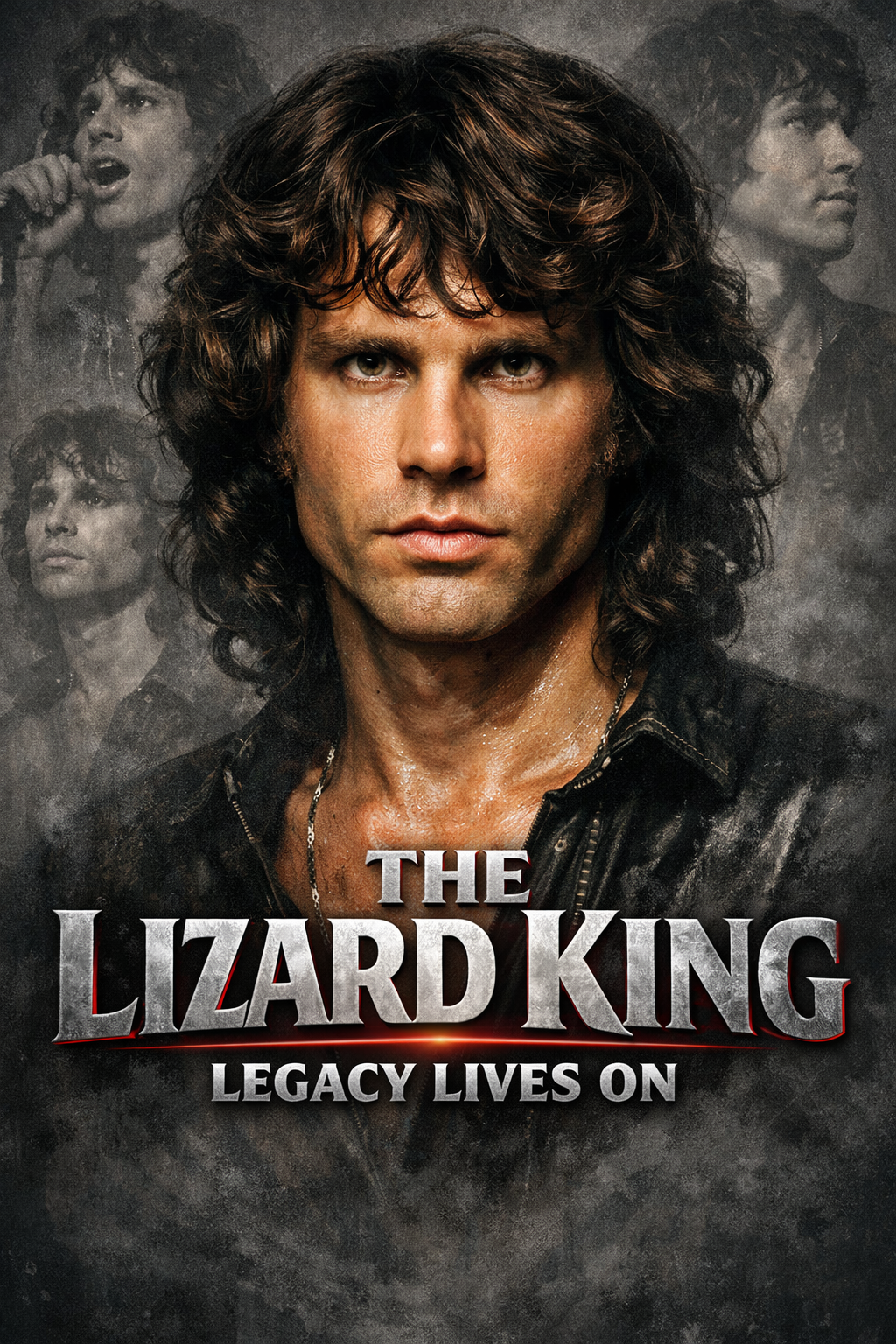
Jim Morrison remains one of the most magnetic and misunderstood figures in the history of rock music. Decades after his passing, his presence still looms large, not only through his music but through the myth, poetry, and raw intensity that defined his life. As the frontman of The Doors, Morrison didn’t just sing songs—he embodied a generation’s hunger for freedom, truth, and rebellion against convention.
Born in 1943, Morrison grew up restless, intelligent, and deeply curious about the world around him. He was a voracious reader, drawn to philosophy, poetry, and mythology, influences that would later shape his lyrics and worldview. These interests gave his music an unusual depth, transforming rock songs into cryptic explorations of love, death, chaos, and transcendence.
When The Doors emerged in the mid-1960s, they sounded unlike anything else on the radio. Their music was darker, more hypnotic, and more confrontational than most of their peers. Morrison’s voice—deep, haunting, and commanding—became the perfect vessel for lyrics that felt both ancient and urgently modern.
On stage, Jim Morrison was unpredictable and electric. His performances blurred the line between concert and ritual, often pushing audiences out of their comfort zones. Sometimes mesmerizing, sometimes controversial, he treated the stage as a space for emotional and spiritual release, refusing to play it safe or conform to expectations.
This refusal to conform made Morrison both celebrated and criticized. His battles with authority, frequent clashes with law enforcement, and public controversies only added to his legend. To some, he was reckless and self-destructive; to others, he was courageously honest, living without filters in a world obsessed with order and control.
Beyond the chaos, Morrison was a poet at heart. His lyrics were layered with symbolism, drawing from ancient myths, Native American spirituality, and existential philosophy. Songs like “The End,” “Riders on the Storm,” and “People Are Strange” continue to resonate because they speak to universal emotions—alienation, fear, desire, and the search for meaning.
Morrison’s struggles with fame and excess were real and deeply personal. The pressures of stardom weighed heavily on him, and his lifestyle often reflected an internal conflict between creative purity and public expectation. Yet even in his darkest moments, his creative spark never fully dimmed.
His death in 1971 at the age of 27 cemented his status as part of the infamous “27 Club,” freezing his image forever in youth and mystery. The circumstances surrounding his passing only deepened the myth, leaving fans to wonder what more he might have created had he lived longer.
Despite his short life, Morrison’s influence has been enormous. Countless musicians, writers, and artists cite him as an inspiration, drawn to his fearless self-expression and poetic approach to rock music. His work helped redefine what a rock frontman could be—intellectual, vulnerable, confrontational, and deeply artistic.
Jim Morrison also challenged society’s ideas about freedom and individuality. He believed in pushing boundaries, even when it came at great personal cost. In doing so, he gave voice to those who felt trapped by social norms and unspoken rules.
Today, Morrison’s legacy lives on not only through The Doors’ timeless music but through the enduring fascination with his life and ideas. His words are still quoted, his songs still played, and his image still studied as a symbol of rebellion and artistic integrity.
In the end, Jim Morrison’s unbreakable spirit lies in his refusal to be ordinary or silent. He lived intensely, loved fiercely, and created art that continues to challenge and inspire. Long after the final note fades, his voice still echoes, reminding the world that true legends never really disappear.