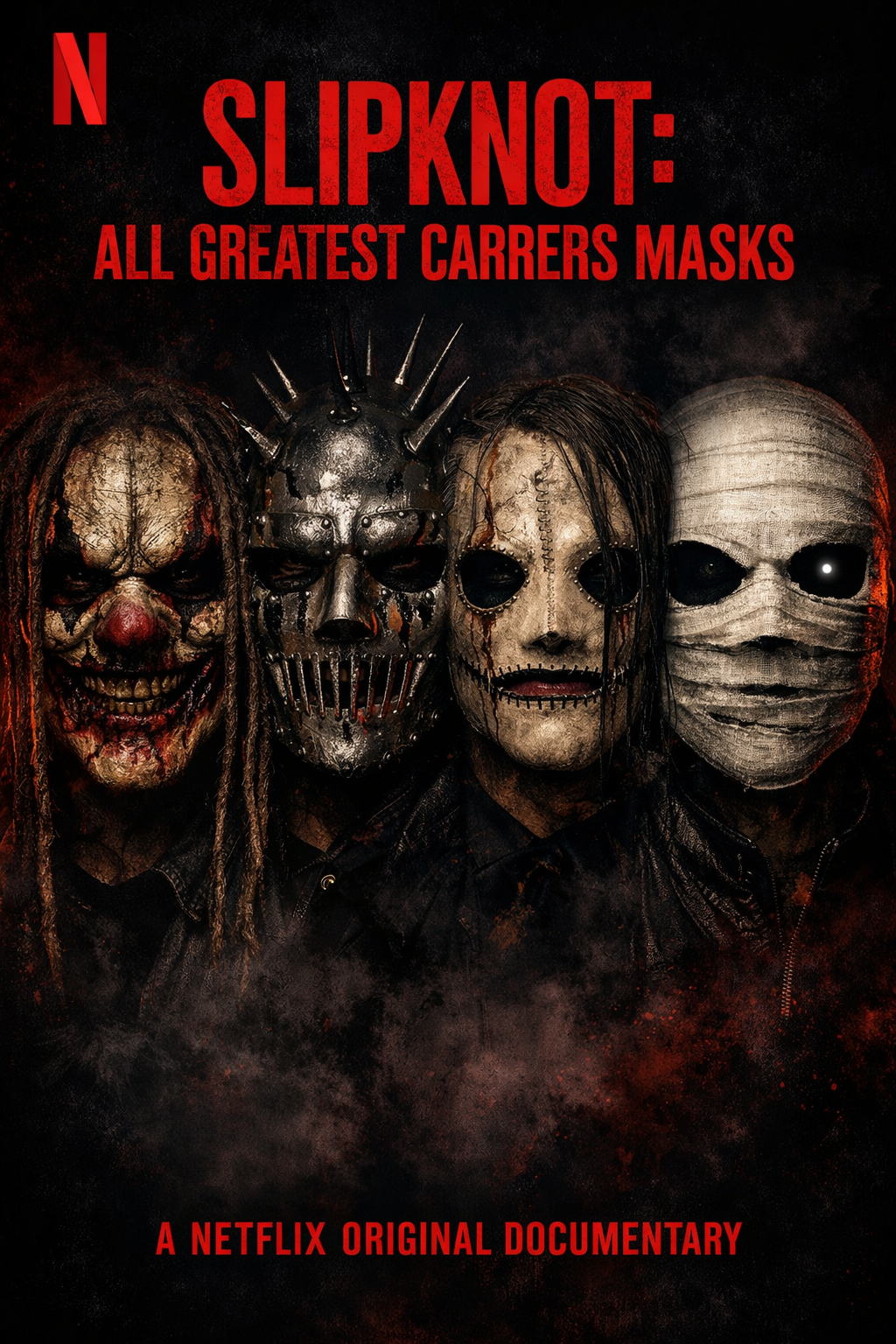
The masks were never just disguises. From the very beginning, they were declarations—loud, unsettling statements that something different had arrived, something raw and unfiltered. Each design carried an energy that words alone could never fully capture, turning faces into symbols of rebellion and sound into something almost visual. It wasn’t about hiding identity; it was about amplifying it beyond recognition.
In the earliest era, there was a sense of chaos that felt almost accidental, yet perfectly aligned with the music. The masks looked handmade, imperfect, and disturbingly human. They blurred the line between performance and reality, leaving audiences unsure whether they were witnessing art or something far more dangerous. That uncertainty became part of the allure, pulling people deeper into a world that refused to explain itself.
As time moved into the next phase, the masks evolved with sharper intent. They became more aggressive, more structured, and undeniably more iconic. Metal, spikes, stitched features—every detail seemed designed to provoke a reaction. This era was louder, heavier, and more confident, as if the band had fully embraced the identity they had once only hinted at. The masks no longer whispered chaos; they screamed it.
What made this transformation powerful was not just the visual change, but the emotional weight behind it. Each mask felt like a reflection of something internal, something fractured and intense. Fans began to see themselves in these exaggerated forms, connecting with the raw honesty hidden beneath the horror. The masks became mirrors, reflecting anger, pain, and defiance in ways that felt deeply personal.
The third era introduced a different kind of darkness—more refined, yet no less haunting. The designs grew more deliberate, almost artistic in their construction. There was a sense of control now, a mastery over the chaos that once felt unpredictable. The masks still unsettled, but they also fascinated, drawing attention to the craftsmanship and symbolism behind each feature.
This period marked a shift in perception. What was once seen purely as shock value began to be recognized as a form of storytelling. Each mask carried history, evolution, and meaning, turning every performance into a continuation of a larger narrative. It wasn’t just about music anymore; it was about identity, transformation, and the passage of time.
Then came the modern era, where the masks took on an even deeper psychological edge. They became less about external aggression and more about internal complexity. Subtle details replaced overt brutality, creating designs that felt eerily human yet disturbingly altered. It was as if the masks had grown alongside the band, maturing into something more introspective and layered.
Despite all these changes, one thing remained constant—the ability to evoke fear and fascination in equal measure. The masks never lost their power to captivate, to make people look twice, to leave a lasting impression long after the music stopped. They became timeless, existing beyond trends and expectations.
The evolution of these masks tells a story that words alone cannot fully capture. It’s a journey through sound, emotion, and identity, expressed through materials, textures, and design. Each era adds a new chapter, building upon the last while pushing boundaries further than before.
For fans, the masks are more than just visuals—they are memories. They represent moments, songs, and emotions tied to specific points in time. Seeing them change is like watching a living history unfold, one that continues to grow and redefine itself with every passing year.
There is also a deeper truth hidden beneath the surface. The masks remind us that identity is not fixed, that it can evolve, adapt, and transform. They challenge the idea of permanence, showing that even the most recognizable symbols can change without losing their essence.
In the end, the masks are not just about fear or shock—they are about expression. They are a testament to the power of reinvention and the courage to embrace something different. Through every era, they have defined chaos, shaped a legacy, and brought the evolution of fear to life in ways that continue to resonate.
THE MASKS THAT DEFINED CHAOSFOUR ERAS. ONE LEGACY.THE EVOLUTION OF FEAR