Stevie Nicks and the Spirit of ‘Rhiannon’: How One Song Changed Everything
When Stevie Nicks first introduced the world to the mystical and haunting character of “Rhiannon” in 1975, little did she know that this ethereal song would go on to become one of the defining tracks of Fleetwood Mac’s legacy. “Rhiannon,” with its swirling melodies and poetic lyrics, was not just a song—it was a revelation, a declaration of the spirit of women’s empowerment, independence, and the mysticism that Nicks so expertly infused into her music. Its impact reached far beyond the music charts, shaping the cultural landscape of the 70s and beyond, all while cementing Stevie Nicks’s place in the pantheon of rock’s greatest icons.
Stevie Nicks was not the first to write about complex, strong, and independent women in rock, but her portrayal of Rhiannon, a mysterious figure based on a Welsh legend, brought something different to the stage. Nicks’s vision of the character combined both fantasy and reality, borrowing from the ancient myth while adding a layer of her own vulnerability and strength. The song’s ability to bridge the gap between the ancient and modern, the mystical and the real, is a hallmark of Nicks’s songwriting style.
Before “Rhiannon,” Fleetwood Mac was already a renowned band, but it wasn’t until Nicks joined in 1975 that they began to fully realize their potential as a global force. Her addition to the band brought a fresh, new energy that could not be ignored. While the band was known for its intricate harmonies and layered musicality, Nicks’s distinct voice and unique perspective gave the band a magical dimension. “Rhiannon” was a song that encapsulated everything that Fleetwood Mac, in its most iconic form, stood for.
Lyrically, “Rhiannon” was a departure from the traditional love songs of the time. It tells the story of a woman who is both free and mysterious, untouchable yet deeply connected to the natural world. The lyrics speak to themes of freedom, wildness, and transformation. Nicks herself has mentioned that Rhiannon was a character she could deeply relate to, embodying her own sense of liberation and desire to connect with something greater than herself.
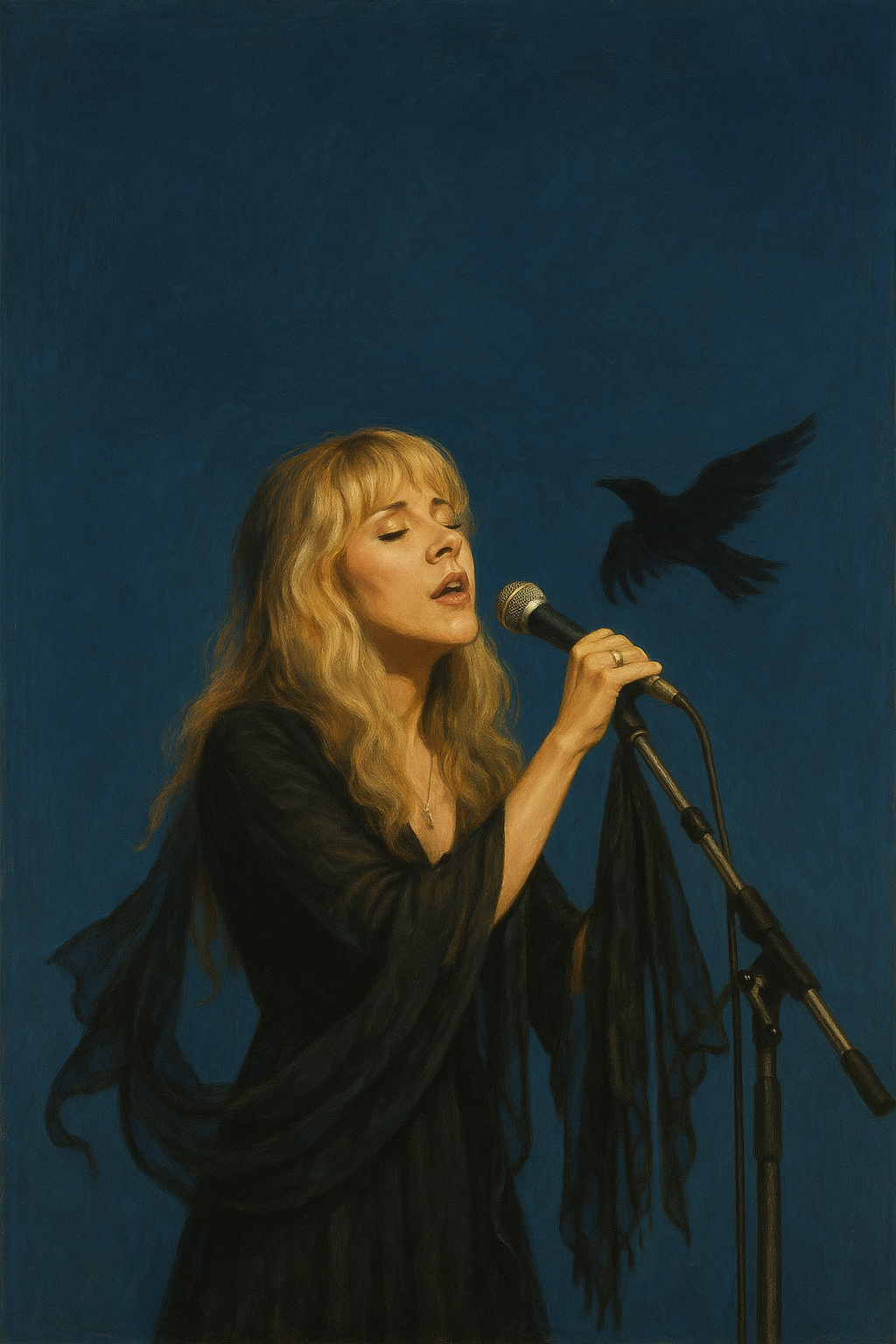
The power of “Rhiannon” was not just in its lyrics but also in its delivery. Nicks’s voice, with its raspy, soulful tone, carried a vulnerability that made Rhiannon’s character feel real. There was something almost ethereal about the way Nicks sang the song, a quality that made audiences feel they were witnessing a performance, but also a transformation. When Nicks performed “Rhiannon” live, it became a ritualistic experience, where the lines between performer and character blurred. She brought Rhiannon to life on stage, her flowing shawls and flowing hair adding to the mystique of the character. It was as if Stevie herself was becoming Rhiannon every time she sang the song.
“Rhiannon” quickly became one of Fleetwood Mac’s most beloved songs, a centerpiece of their live shows and a track that would define their sound. The song resonated with fans on a deeply personal level. It wasn’t just a catchy tune—it was a story of empowerment, of embracing the unknown, of being both fierce and vulnerable. Women especially felt a deep connection to the song, as Rhiannon was a figure who defied expectations, who was untamable, and who lived outside the traditional boundaries of society.
As the years went by, “Rhiannon” evolved. Nicks’s relationship with the song became more complex as she grew as an artist. Over time, “Rhiannon” came to represent not just a character, but a philosophy—a way of being. Nicks often reflected on how the song had changed and adapted to her life, just as her own life had evolved in the years since its release. The song became an anthem of freedom and individuality for generations to come, transcending its original era to remain a timeless part of rock history.
In many ways, “Rhiannon” was the song that defined Stevie Nicks’s persona in the public eye. It wasn’t just her voice or her songwriting that captivated audiences—it was the embodiment of the spirit of Rhiannon herself. Stevie became a symbol of wildness and mysticism, qualities that she embraced both on and off the stage. The success of “Rhiannon” set the stage for Nicks’s later solo career, where she would continue to explore themes of freedom, spirituality, and the complexities of the human experience.
But what makes “Rhiannon” so enduring is not just the success it brought Stevie Nicks or Fleetwood Mac, but the way it resonated on a cultural level. The song came to symbolize a particular era of rock music, where boundary-pushing and genre-defying sounds were embraced, where women could take center stage and tell their stories on their own terms. In this way, “Rhiannon” was a song ahead of its time, offering a window into the future of women in rock, where the mysticism of Nicks’s character would blend seamlessly with the powerful, independent voices that were to follow.
Looking back, it’s clear that “Rhiannon” didn’t just change the trajectory of Fleetwood Mac’s career—it changed the way we think about women in rock music. The song was one of the earliest expressions of Stevie Nicks’s unique artistry, and it became a blueprint for the role of women in the music industry moving forward. In “Rhiannon,” Nicks created a song that wasn’t just about love or loss—it was about power, spirit, and self-expression.
“Rhiannon” remains a testament to Stevie Nicks’s enduring influence, a song that continues to capture the imagination of new listeners with each passing decade. It’s more than just a song—it’s a legacy, one that reminds us of the power of storytelling, the spirit of independence, and the magical possibility that lies within each of us. Through “Rhiannon,” Nicks forever etched her place in rock history, not just as a member of Fleetwood Mac, but as an iconic artist whose influence continues to echo through the generations.
In the end, it’s easy to see why “Rhiannon” endures. It’s a song about freedom, about embracing the unknown, and about finding strength in vulnerability. It’s a song that embodies the spirit of Stevie Nicks herself—a spirit that, like Rhiannon, will never be tamed.