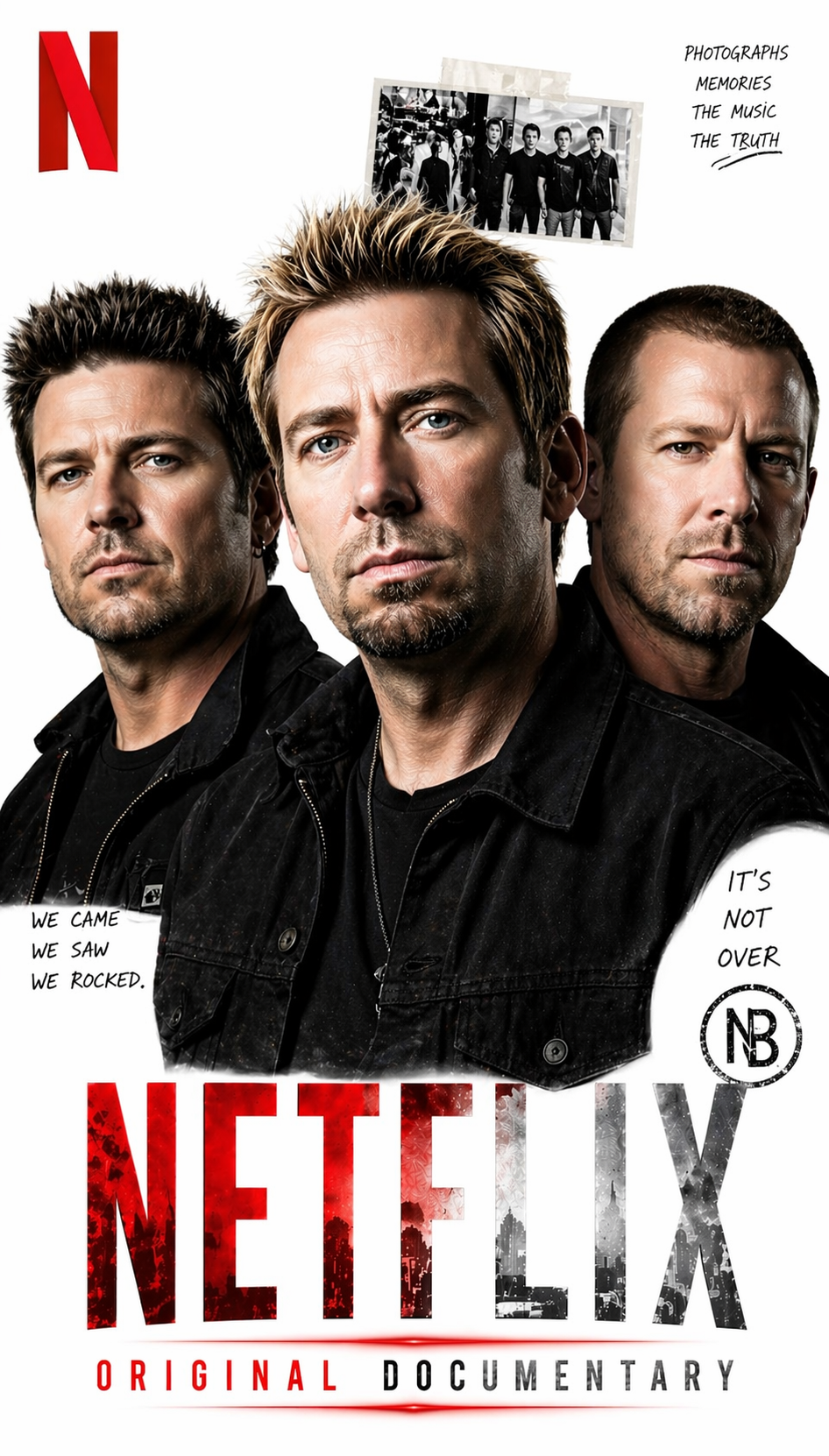
Netflix has officially released the trailer for the highly anticipated Nickelback documentary, sparking immediate conversation across social media and music communities. The first look offers a glimpse into a story that appears far more layered than a simple rise-to-fame narrative, hinting at both the triumphs and challenges that shaped one of rock’s most talked-about bands.
For years, Nickelback has occupied a unique place in popular culture. Few bands have achieved such widespread commercial success while also becoming the subject of endless debate, parody, and online discourse. That contradiction alone makes them an intriguing documentary subject.
The trailer opens with archival footage that captures the band’s early days, showcasing a much younger version of the group before sold-out arenas, platinum records, and global recognition became part of their reality. These early clips suggest the documentary will dedicate meaningful attention to their beginnings.
As the preview progresses, the tone shifts toward something more reflective. Behind-the-scenes moments, candid interviews, and emotionally charged voiceovers hint at a deeper exploration of the pressures that came with global fame. Rather than focusing solely on chart success, the documentary seems interested in the human cost of being constantly scrutinized.
One of the most compelling elements teased in the trailer is the documentary’s willingness to confront the band’s controversial reputation head-on. Nickelback’s place in internet culture is impossible to ignore, and the preview suggests this topic will not be avoided or glossed over.
Interviews featured in the trailer appear to include not only members of the band but also collaborators, industry figures, and cultural commentators. This broader perspective could help contextualize how Nickelback became both commercially dominant and culturally polarizing.
Visually, the trailer leans into a polished but nostalgic style. Grainy footage from the band’s earlier tours is contrasted with high-definition interview setups, creating a balance between past and present. The editing feels dynamic without becoming overly dramatic.
The soundtrack choices in the trailer are equally strategic. Familiar riffs and emotionally resonant instrumental moments build anticipation while reinforcing the emotional stakes of the story. Music is clearly positioned as both the documentary’s subject and its emotional engine.
Another notable aspect is the emphasis on resilience. The trailer repeatedly returns to themes of persistence, criticism, reinvention, and longevity. Whether audiences love or dislike Nickelback, their ability to remain culturally relevant for decades is undeniable.
Fan reactions online have already been intense. Longtime listeners are expressing excitement at finally seeing a more personal and comprehensive look into the band’s history, while even casual observers seem curious about what the documentary might reveal.
There is also broader appeal here beyond Nickelback’s core audience. Stories about fame, public perception, backlash, and artistic endurance tend to resonate widely, and this project seems positioned to explore all of those themes through a recognizable lens.
Documentaries centered on musicians often succeed when they uncover complexity beneath a familiar public image. Based on the trailer alone, this release appears determined to challenge assumptions while offering a more nuanced portrait of a band often reduced to memes and stereotypes.
With anticipation continuing to build, the trailer has successfully done its job: it has reignited interest, stirred conversation, and reminded audiences that few bands inspire as much reaction as Nickelback. Whether viewers approach the documentary as fans, critics, or simply curious observers, it already feels like one of the more conversation-worthy music releases on Netflix’s slate.