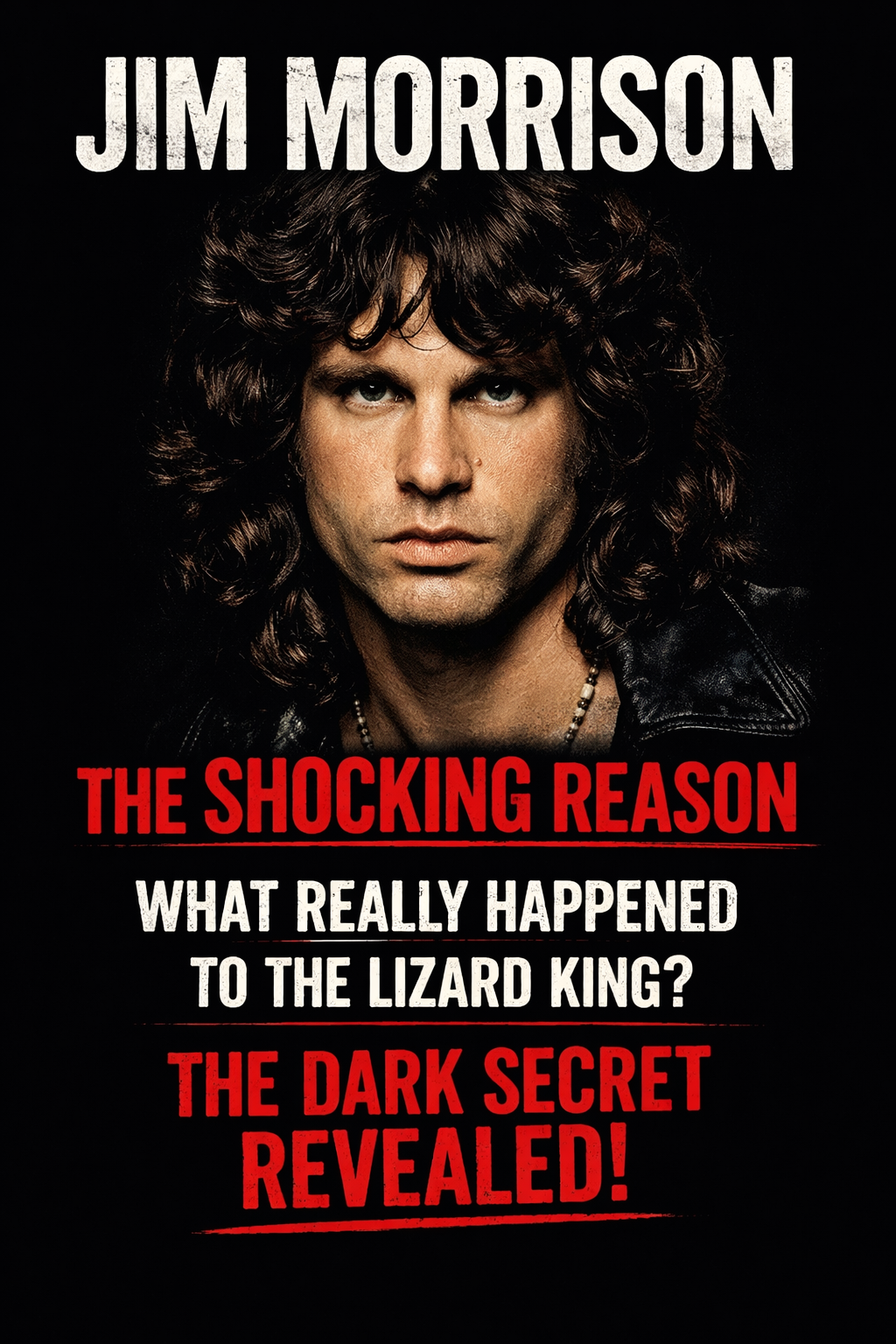
The myth surrounding Jim Morrison did not begin with his death; it began with the way he lived. From the moment he stepped into the public eye, Morrison seemed less like a rock star and more like a symbol—of rebellion, poetry, chaos, and freedom. People didn’t just listen to him; they projected their fears and desires onto him.
What made Morrison unsettling to many was not simply his behavior, but his refusal to be easily understood. He quoted philosophers, challenged authority, and blurred the line between performance and reality. This unpredictability made him fascinating, but it also made him dangerous in an industry that preferred control.
As fame grew, so did the pressure. Morrison was constantly watched, judged, and interpreted. Every word he spoke was analyzed, every action magnified. The freedom he sang about became increasingly difficult to live.
There was also the burden of expectation. Fans wanted the wild poet. Record labels wanted the profitable rebel. The media wanted scandal. Very few seemed to want the man behind the image.
Morrison’s struggles were not unique, but his visibility made them relentless. Privacy was almost impossible. Even moments of introspection were turned into spectacle, leaving little space for healing or grounding.
His relationship with art became more complicated as success grew. What once felt like expression began to feel like obligation. Creativity, when demanded rather than inspired, can become suffocating.
There were attempts to escape—travel, poetry, silence—but escape is difficult when your name itself is a brand. Morrison carried his reputation wherever he went, whether he wanted to or not.
The legal troubles and controversies that followed him further narrowed his path. Each incident added another layer to the narrative others were writing for him, often ignoring his own voice.
What often gets overlooked is how young he was. Beneath the mythology was a man still figuring himself out, doing so under a spotlight few could survive.
His death froze him in time. The questions left unanswered became fuel for speculation, transforming him into a permanent mystery rather than allowing him to remain human.
Perhaps the most shocking element is not how his life ended, but how little room there was for him to simply exist without explanation. Morrison became a story before he could finish writing himself.
In the end, the tragedy may lie not in a single event, but in the collision between a fragile individual and an unforgiving machine that thrives on legends, not people.
Jim Morrison’s legacy often feels louder than his actual voice. Decades later, his image still stares back at us, intense and unyielding, as if daring the world to understand him at last. Yet understanding has always been elusive.
He lived during a time of cultural upheaval, when music was more than entertainment—it was protest, philosophy, and identity. Morrison embodied all of that, but embodiment comes with a cost.
The Doors were not just a band; they were a challenge. Their music asked listeners to confront discomfort, desire, and uncertainty. Morrison became the face of that challenge, whether he wanted the role or not.
Over time, the line between Jim Morrison the person and Jim Morrison the symbol all but disappeared. When that happens, personal pain often becomes invisible.
Many assume excess was the entire story, but excess is usually a symptom, not a cause. Behind it often lies exhaustion, confusion, or a search for meaning that never quite resolves.
Morrison was deeply introspective, even when the world saw only chaos. His journals and poems reveal someone wrestling with existence, not celebrating destruction.The industry around him benefited from the chaos. Controversy sold records. Headlines sold myths. Few incentives existed to slow things down or offer protection.
As the pressure mounted, retreat became more appealing. Stepping away from the spotlight was not weakness; it was survival. Unfortunately, stepping away does not erase the weight already carried.
When his life ended, the silence spoke loudly. Without answers, people filled the gaps with theories, often overlooking the simplest truth—that human limits exist, even for icons.
What shocks many is not a hidden secret, but the realization that brilliance does not shield anyone from vulnerability. Talent does not grant immunity from struggle.
The romanticization of his death often distracts from the lessons of his life. Creativity flourishes best where care, balance, and understanding exist.
Remembering Morrison honestly means resisting the urge to reduce him to a single narrative. He was many things at once—poet, performer, rebel, and human.
Perhaps the real reason his story still resonates is because it reflects a timeless conflict: the cost of being seen without being truly known.