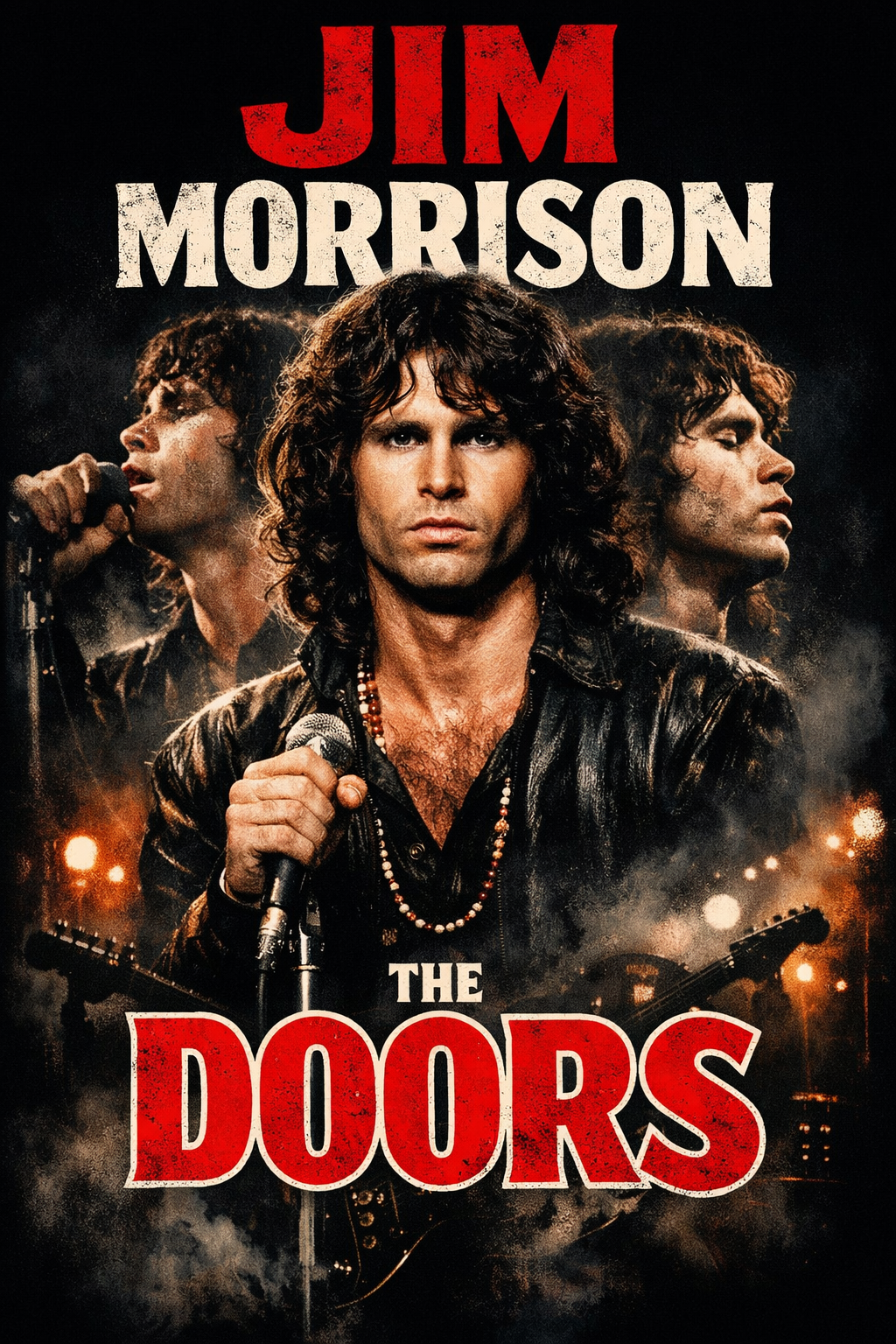
Netflix has officially unveiled a new documentary centered on Jim Morrison, reigniting global interest in one of rock music’s most enigmatic and influential figures. The project promises to explore not only Morrison’s meteoric rise as the frontman of The Doors, but also the deeper layers of his artistry, philosophy, and personal struggles that shaped his brief yet powerful life.
Jim Morrison remains a cultural icon decades after his death, remembered as much for his poetic intensity as for his commanding stage presence. The documentary aims to revisit the late 1960s countercultural movement through Morrison’s eyes, placing his work within the political, social, and artistic upheaval of the era. By doing so, it seeks to contextualize why his voice resonated so deeply with a generation.
According to early details, the film draws from rare archival footage, restored performances, and previously unheard audio recordings. These materials are expected to offer a more intimate perspective on Morrison’s creative process, revealing how poetry, literature, and mythology fueled his songwriting and performances. Fans can expect moments that feel raw, personal, and unfiltered.
The documentary also examines Morrison’s relationship with fame and the pressures that came with it. As The Doors rapidly ascended to international stardom, Morrison struggled to reconcile his private self with his public persona. This internal conflict became a defining element of his life and ultimately influenced both his art and his personal downfall.
Interviews with surviving band members, close friends, collaborators, and cultural historians form a key part of the narrative. These voices help paint a multidimensional portrait of Morrison, moving beyond the familiar image of the wild rock star to reveal a thoughtful, conflicted, and often misunderstood artist.
Special attention is given to Morrison’s role as a poet. Long before he became a rock icon, he saw himself as a writer, deeply inspired by figures such as Arthur Rimbaud and William Blake. The documentary highlights how Morrison viewed music as a vehicle for poetry, performance, and transcendence rather than mere entertainment.
The film does not shy away from the darker aspects of Morrison’s life. His battles with substance abuse, clashes with authority, and controversial onstage behavior are addressed with nuance, aiming to show how these elements were intertwined with the broader pressures of celebrity and creative expectation.
Paris, the city where Morrison spent his final months and ultimately died in 1971, is another focal point. The documentary reflects on his decision to step away from the spotlight and seek a quieter existence devoted to writing, raising enduring questions