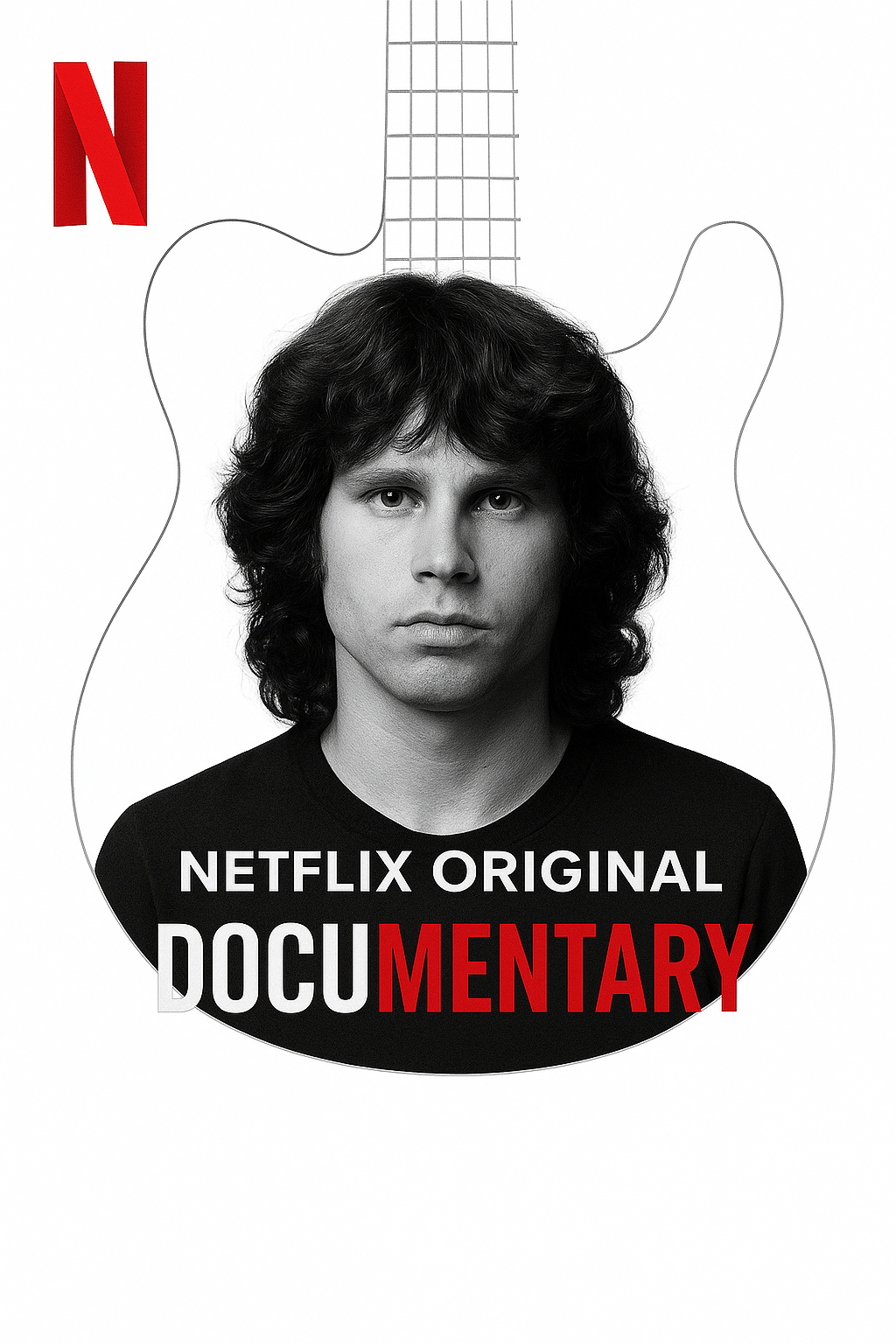
Jim Morrison, the enigmatic frontman of The Doors, has never truly left the cultural spotlight, but Netflix’s explosive new documentary brings him back into sharp focus for a new generation. The film digs deeper than the typical rock-star profile, exploring not just Morrison’s rise to fame, but the psychological and artistic storms that drove his creativity. It feels less like a rehash of old footage and more like a rediscovery of a legend whose impact continues to echo across decades.
From the opening scenes, viewers are pulled into a vivid reconstruction of the late ’60s, a turbulent era that shaped Morrison’s worldview and his music. The documentary blends remastered archival footage, rare audio recordings, and interviews with people who knew him intimately. It paints a raw, unfiltered portrait of Morrison that feels more human and more haunting than anything produced before.
One of the most compelling aspects of the film is its focus on Morrison’s poetic identity. Many documentaries emphasize his wild persona, but this one digs into his notebooks, his incomplete manuscripts, and his fascination with philosophy. The result is a richer depiction of a man who often felt misunderstood by the world that worshipped him. The filmmakers make a powerful case that Morrison was as much a poet as he was a rock icon.
Another standout element is how the film contextualizes Morrison’s fame within the counterculture movement. It examines how the political tension, artistic rebellion, and social upheaval of the era fueled his ambition and amplified his frustrations. Instead of presenting him as an untouchable legend, the documentary humanizes him by showing the pressures he faced as a symbol of youth revolt.
The documentary doesn’t shy away from Morrison’s darker side. It explores his struggles with substance use, his volatile relationships, and his growing discomfort with fame. But rather than sensationalizing these issues, the film approaches them with nuance and empathy. These moments feel like honest reflections rather than tabloid drama, deepening the overall narrative.
The interviews featured in the documentary add tremendous depth. Friends, collaborators, and cultural historians provide firsthand insight into Morrison’s personality and creative process. Some recall his fierce intelligence, others describe his unpredictability, and still others speak about the tender vulnerability he often hid from the public. Together, they create a multifaceted portrait of a man who constantly wrestled with the meaning of his own identity.
Netflix’s production quality also deserves praise. The editing is sharp, the pacing energetic, and the sound restoration impressive. The Doors’ music has never sounded better, thanks to careful remastering that gives every performance a fresh vitality. Even longtime fans may feel as though they’re hearing familiar songs with new clarity.
Visually, the documentary is stunning. It blends vintage film, modern cinematic techniques, and artistic recreations in a way that feels immersive rather than gimmicky. The camera lingers on Morrison’s performances just long enough to capture his magnetic stage presence without losing narrative momentum. Every scene feels intentional, crafted with both respect and creative ambition.
The film also explores Morrison’s complex relationship with fame. He was charmed by it, repelled by it, fascinated by it, and ultimately overwhelmed by it. The documentary traces how this tension influenced his art, especially in the years leading up to his departure from the United States. It’s a deeper look at the emotional cost of being a cultural icon.
Another important thread in the film is Morrison’s desire for reinvention. As his musical career skyrocketed, he longed to pursue film, poetry, and personal transformation. Netflix’s documentary shows how these dreams shaped his decisions, including his fateful move to Paris. By the time the film reaches this final chapter, viewers feel the weight of a man searching desperately for peace.
The documentary ends on a note that is both emotional and reflective. It does not dwell on Morrison’s death, but rather on his legacy—how his words, his voice, and his defiance continue to inspire new generations. The final sequences celebrate Morrison not as a tragic figure, but as an artist whose fire remains alive in the hearts of millions.
Overall, Netflix’s new documentary is a powerful tribute to one of rock’s most captivating figures. It offers fresh insight for devoted fans and serves as a compelling introduction for newcomers discovering Morrison for the first time. More than anything, it reminds us why Jim Morrison’s image and voice continue to resonate long after his time. Netflix hasn’t just dropped a documentary—they’ve reignited the legend.