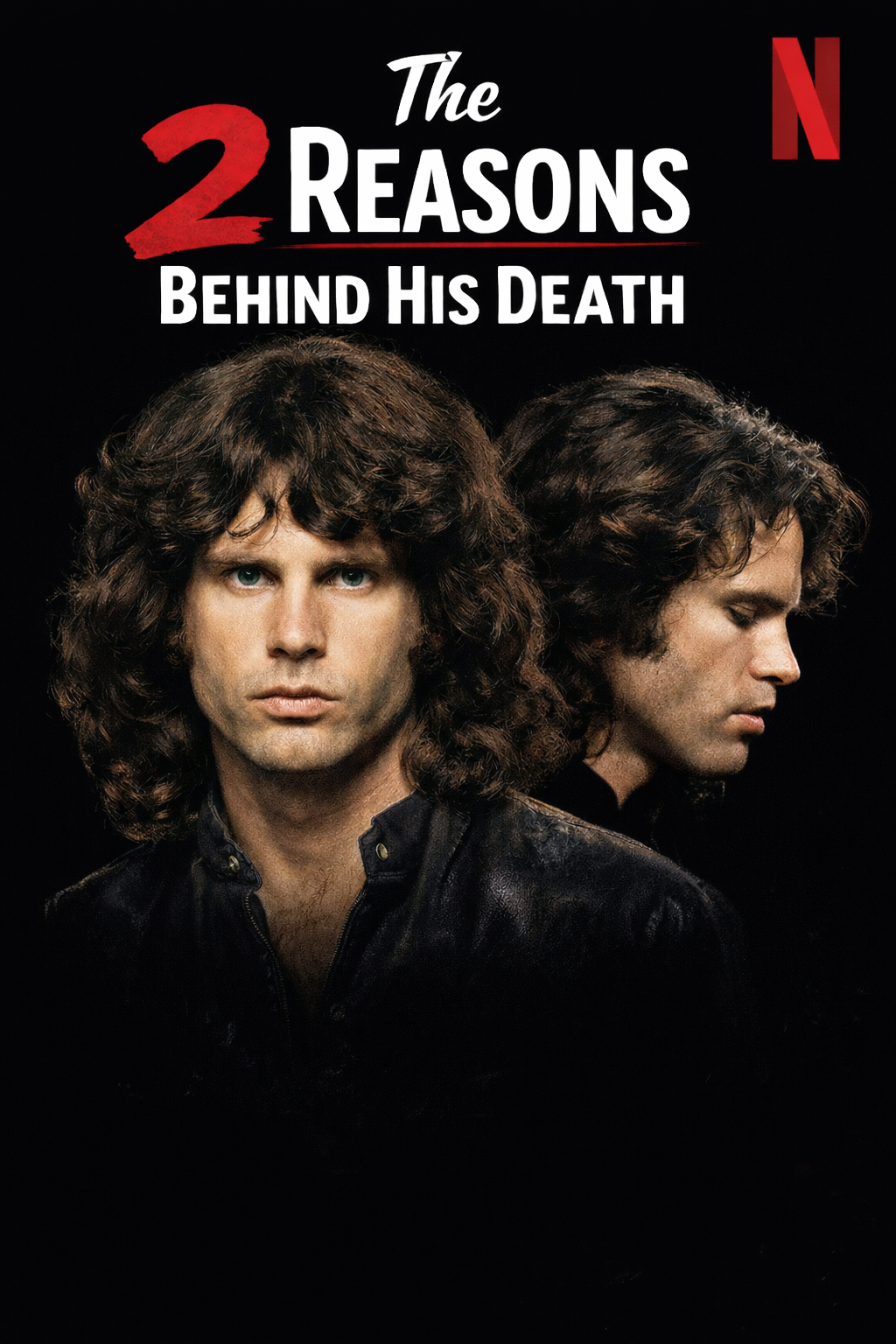
Netflix has once again stepped into the world of music history and cultural mystery by revealing a trailer that explores the two most discussed reasons behind the death of Jim Morrison. As the legendary frontman of The Doors, Morrison remains one of rock music’s most enigmatic figures, and his sudden death at the age of 27 continues to provoke fascination more than five decades later. The trailer suggests a deep dive into the circumstances, contradictions, and unanswered questions surrounding his final days in Paris.
Jim Morrison was not only a musician but also a poet, philosopher, and cultural rebel who embodied the spirit of the late 1960s. His lyrics challenged authority, explored altered states of consciousness, and confronted themes of life and death with unusual intensity. When news broke in 1971 that Morrison had been found dead in a Paris apartment, the shock rippled across the world, instantly cementing his place in the so-called “27 Club.”
The Netflix trailer sets a somber and investigative tone, indicating that the documentary will revisit the official narrative while also examining alternative perspectives. Rather than offering sensational claims outright, the preview suggests a methodical reconstruction of events using archival footage, expert commentary, and firsthand accounts from those closest to Morrison during his final months.
One of the reasons explored appears to center on the officially recorded cause of death. At the time, French authorities listed heart failure as the cause, and no autopsy was conducted. This lack of a post-mortem examination has long fueled skepticism, especially given Morrison’s lifestyle and the absence of medical verification that might have clarified the exact circumstances.
The trailer also hints at another widely discussed possibility that has circulated among fans and biographers for decades. Without making definitive accusations, the documentary seems poised to examine how substance use, environmental factors, and the social scene Morrison was immersed in could have contributed to his death. By framing this as an exploration rather than a conclusion, Netflix appears to be walking a careful line between investigation and respect.
What stands out in the trailer is its emphasis on context. Morrison had moved to Paris seeking peace, anonymity, and space to focus on his writing. Friends described him as both calmer and deeply conflicted during this period, suggesting a man caught between self-reflection and self-destruction. The documentary appears intent on portraying this complexity rather than reducing his death to a single moment or cause.
The inclusion of rare audio recordings and previously unseen photographs adds emotional weight to the project. These elements seem designed not only to inform but also to immerse viewers in Morrison’s final chapter. The trailer implies that understanding his death requires understanding the pressures, expectations, and inner struggles that defined his life.
Netflix’s approach also reflects a broader trend in modern documentaries, where the goal is not to provide simple answers but to examine why certain questions remain unresolved. By revisiting Jim Morrison’s death through a contemporary lens, the film invites viewers to reconsider what they think they know and why certain narratives persist.
Fans of The Doors are likely to find the trailer both compelling and unsettling. Morrison’s legacy has always been inseparable from myth, and revisiting his death risks reopening emotional debates. However, the trailer suggests that the documentary aims to honor his artistry while acknowledging the uncertainty that surrounds his final moments.
Critically, the trailer avoids portraying Morrison as merely a victim of excess. Instead, it hints at a more nuanced portrait of a man struggling with fame, identity, and creative freedom. This framing may help shift the conversation away from simplistic explanations and toward a deeper understanding of the era that shaped him.
The anticipation surrounding the documentary reflects Jim Morrison’s enduring relevance. Even decades after his death, new generations continue to discover his music and persona, often encountering the mystery of his passing as part of that discovery. Netflix’s trailer taps into this ongoing curiosity while promising a thoughtful exploration rather than a definitive verdict.
Ultimately, the trailer positions the documentary as an invitation to reflect rather than judge. By examining two central reasons that have shaped public understanding of Jim Morrison’s death, Netflix appears to be offering a space for dialogue, remembrance, and reconsideration. Whether it brings new clarity or simply reframes old questions, the project reinforces the idea that Jim Morrison’s story, like his music, refuses to fade quietly into history.