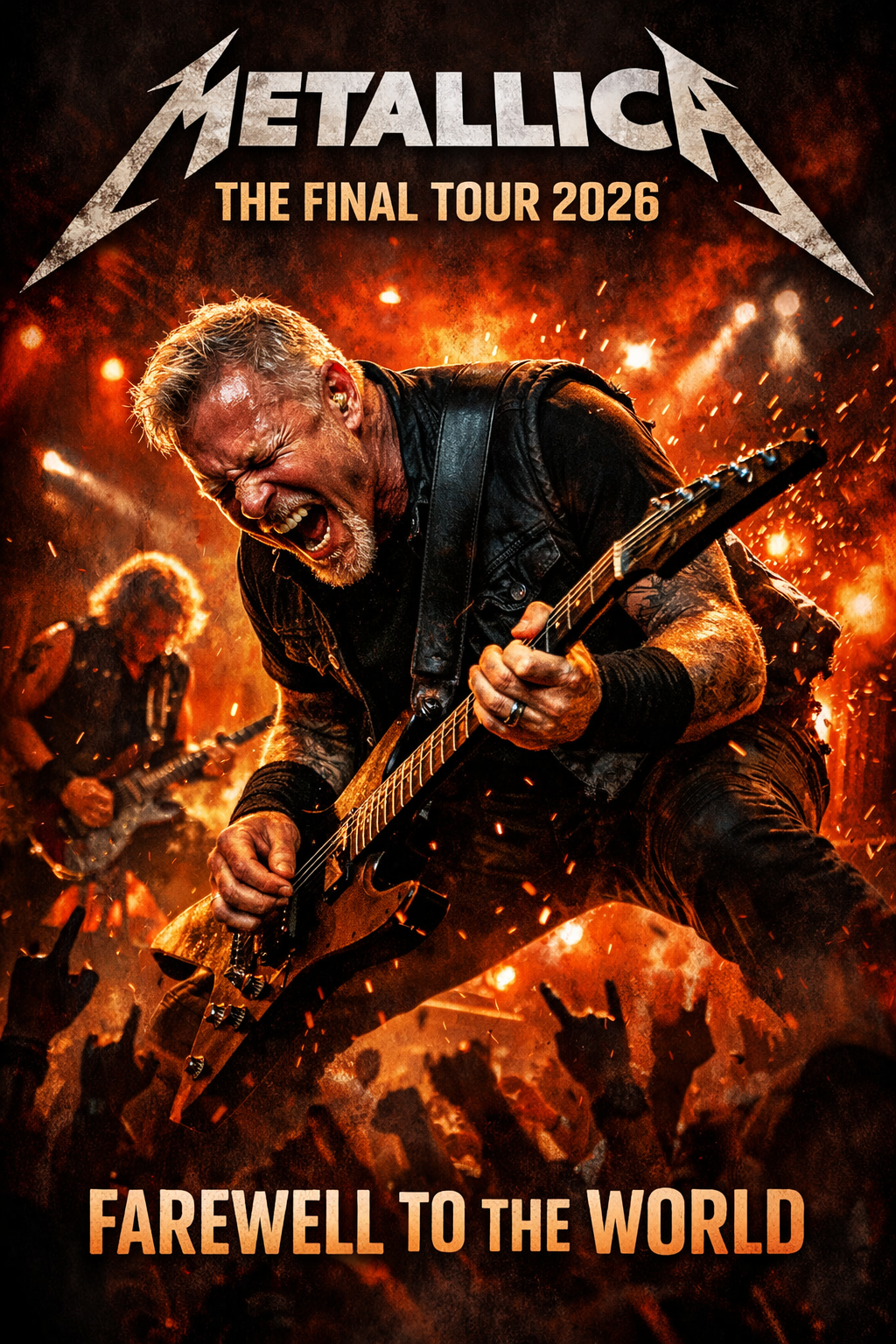
The announcement landed with the weight of history behind it, reverberating through the global music community in a way few bands could ever manage. Metallica, a name synonymous with heavy metal itself, has confirmed that 2026 will mark their farewell tour, signaling the closing chapter of a career that has spanned more than four decades.
For fans who grew up with their riffs as a soundtrack to youth, rebellion, and identity, the news feels both inevitable and deeply emotional.
From their raw beginnings in the early 1980s to their status as stadium-filling icons, Metallica’s journey has been defined by constant evolution. They never stayed still, never allowed themselves to become a nostalgia act, even as their catalog aged into legend.
The idea that this restless force is now preparing a final lap around the world carries a sense of gravity that goes beyond a typical tour announcement.
The farewell tour is being framed not as a quiet goodbye, but as a celebration of everything the band has built. It is meant to honor the countless nights of sweat-soaked clubs, the explosive festival performances, and the millions of fans who turned their songs into personal anthems. In that sense, the end feels less like a full stop and more like a final, emphatic exclamation point.
For longtime followers, the news stirs memories of first encounters with Metallica’s music. Whether it was hearing a battered cassette of “Kill ’Em All,” discovering the emotional depth of “Master of Puppets,” or witnessing the cultural dominance of the self-titled Black Album, each era carries its own emotional weight. The farewell tour invites fans to revisit those moments together, one last time.
The band’s influence on metal and rock at large is impossible to overstate. They helped push thrash metal from underground scenes into mainstream consciousness, opening doors for countless artists who followed. Even those who never considered themselves metal fans have felt the reach of Metallica through radio, film, and popular culture.
There is also a sense of respect embedded in the decision to step away on their own terms. Rather than fading quietly or carrying on indefinitely, the band appears intent on choosing when and how the story ends. In an industry where longevity often blurs into repetition, that choice feels deliberate and dignified.
Fans are already speculating about what the farewell tour will include, imagining setlists that span every era and performances designed to reflect the band’s full history. The anticipation is less about spectacle and more about connection, about sharing space with music that has meant so much for so long. Each show is expected to feel like both a concert and a communal remembrance.
The emotional complexity of the moment is hard to ignore.
There is gratitude for the music, sadness at the goodbye, and admiration for a band that remained relevant for decades without losing its core identity. Metallica’s ability to balance aggression, melody, and ambition allowed them to grow alongside their audience, rather than outgrow it.
Younger fans, many of whom discovered the band through streaming platforms rather than record stores, are experiencing a different kind of urgency. The farewell tour represents a final opportunity to see a living piece of music history in real time, rather than through archival footage or secondhand stories.
At the same time, the announcement invites reflection on what Metallica leaves behind. Their albums will continue to inspire new musicians, their songs will remain staples of rock radio, and their live performances will be spoken about with reverence. Ending the touring chapter does not erase the impact; it cements it.
There is something poetic about a band known for confronting darkness and intensity choosing to face its own ending openly. Rather than avoiding the conversation, Metallica has embraced it, allowing fans to prepare, reflect, and participate in the farewell.
That transparency feels consistent with the honesty that has often marked their music.
As 2026 approaches, the farewell tour will likely become more than a series of dates on a calendar. It will stand as a global moment of appreciation for a band that reshaped heavy music and challenged expectations at every turn. The era may be ending, but the echo of Metallica’s legacy will continue to ring loud long after the final note is played.